
Folklore: Ankou
A Faeries and Folklore by Ronel post

Welcome to Faeries and Folklore by Ronel.
You can listen to this post in English or Afrikaans at the end of this post.
Foklore in a Nutshell
Who didn’t swoon when Brad Pitt played the role of Death in Meet Joe Black? Okay, maybe that was just me.
The personification of Death has been going on for millennia. The Ancient Greeks even had a god, Thanatos, as Death personified. And it’s been rampant in folklore – even in Aesop’s fables.
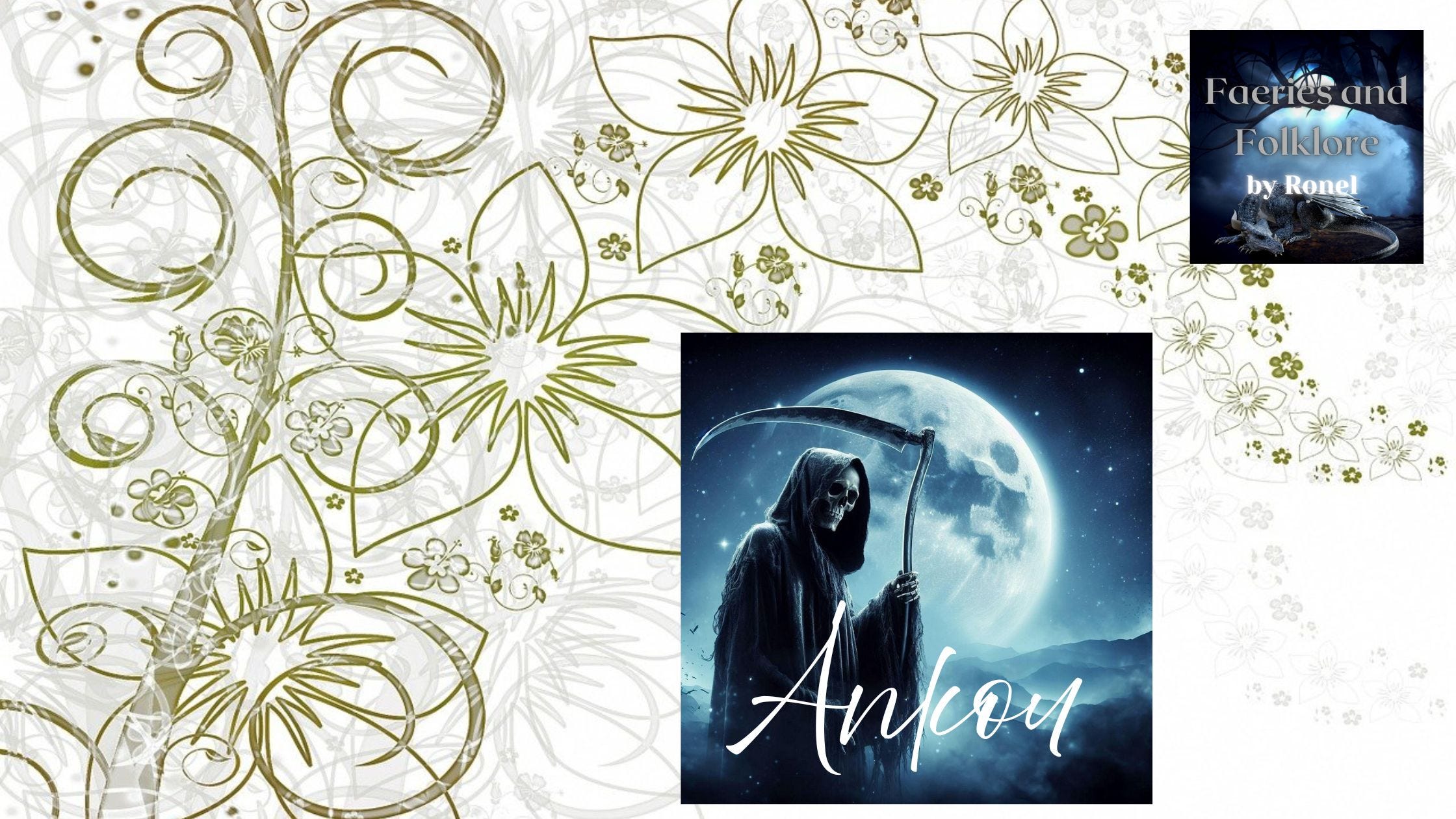
The popular depiction of Death is as a skeletal figure with a large scythe, wearing a black cloak with a hood. This came from 15th century England and has lasted for centuries. Calling this personification of Death the Grim Reaper reportedly started in the mid-18th century. The Grim Reaper is widely used to symbolise death and fear of the unknown.
In most mythologies, Death comes to collect people he/she marked for death and these people try to bribe or trick Death. Sometimes, though, Death is only there to escort the dying to the next world. Death never judges the dead, only escorts them to where they need to go.
There are many death omens in cultures across the world. Pictures falling off the wall, the cry of the Banshee, a black cat meowing at midnight, bees swarming a house, birds flying into the house, bats entering and then escaping the house, a dog scratching the floor, a mouse running over your foot, and even dreaming of a white horse all foretells misfortune and death. Ahem, that means I’m writing this post from the other side of the Veil because all of the above has happened to me in the last decade. The Banshee might have been me when Callum almost bit my finger off when he was eight weeks old…
All of this leads us to Ankou. He is said to be a spectral figure in Breton folklore, the counterpart to the Greek Thanatos. Sometimes, he is the spirit of the last person who died in the community. Usually Ankou is described as being tall with white hair, wearing a wide hat and a long dark cloak – and being a skeleton. Of course, the Ankou’s head revolves constantly to see everyone everywhere. Creepily, Ankou drives a wagon pulled by black horses and piled high with corpses, stops at a house and just adds more (stopping in front of a house means someone inside is going to die). Ankou is something between the driver of the death coach in Irish folklore and the medieval Grim Reaper.
Origin of the Fae
Ankou can appear as a skeletal being with a scythe and wearing a cloak – just as folklore claims. But he usually dresses smartly, especially when visiting the Faery Queen. He stays bone white, though. He likes the fact that all fae fear him, or are at least uncomfortable with his presence – even those who work for him.
He sometimes collects the souls of the dead in his black cart/carriage. Depending on his mood and the circumstances, he can be quite gentle with the recently dead and take them to his realm himself instead of leaving them to the tender mercies of the dullahans and others in his service.
It is his duty to maintain order between the Otherworld and the land of the living (Faerie and Mortal Realm alike). He has various servants (dullahans, banshees, sirens, etc.) with specific duties to maintain this order. His most trusted lieutenants are the Keeper of the Veil and Dagda, ruler of the Underworld.
During Samhain, when the Veil between Worlds are at its thinnest, he leads a procession of dead fae and some of his servants through the world of the living. When they come across living beings, they are to be appeased with baked goods or dessert. Or they will play cruel tricks on the individual. That is why it is best to stay indoors, hidden in the dark, during Samhain lest you attract the attention of Ankou and his subjects.
You can read the full folklore post with references on my blog.
Thanks for reading/watching/listening. I hope you enjoyed the content. If you don’t want to miss a post, please subscribe.
Remember that you can also find me on other platforms.
I’m not interested in getting paid for my podcasts. I feel like it’s about sharing my passion for folklore and books. If you like what I do and prefer buying me a coffee over buying my books, you can do that, too. All links on my website, Ronel the Mythmaker.